Inside teh Matrix: How Grid-Based Slot Formats Are Redefining Win Calculations
Grid-based slot formats have moved beyond traditional payline structures and now rely on matrix layouts where symbols fill rows and columns in varying dimensions. These systems calculate wins through clusters, adjacent connections, or expanding ways rather than fixed lines, and developers continue to refine the underlying algorithms that determine outcomes.
Data from regulatory filings shows that grid mechanics first gained traction in the mid-2010s, with titles featuring 5x5 or 6x6 arrangements appearing on multiple platforms. By 2025, industry reports indicated that operators had integrated these formats into a growing share of new releases, shifting player engagement patterns toward larger symbol fields and dynamic win evaluations.
Mechanics Behind Grid Win Calculations
Traditional slots evaluate wins along predetermined lines that cross the reels from left to right. Grid formats replace that approach with adjacency rules: symbols must touch horizontally or vertically, sometimes diagonally, to form qualifying groups. Each cluster size triggers a payout multiplier that scales with the number of matching symbols, and additional modifiers such as wild expansions or symbol removals often follow the initial evaluation.
Software providers program these calculations using adjacency matrices that scan every position after the reels stop. When a cluster meets the minimum threshold, the system removes those symbols, drops new ones into place, and repeats the scan until no further connections remain. This cascading sequence replaces the single-spin resolution found in line-based games and produces variable win counts per round.
Regulatory Context and Data Releases
Figures released by the Nevada Gaming Control Board in early 2026 documented an increase in the number of approved grid titles submitted for testing, reflecting operator interest in alternative payout structures. The same dataset noted that average return-to-player percentages for grid games remained within established ranges, although volatility profiles differed from those of fixed-line counterparts.
Researchers at the University of Nevada, Las Vegas published a working paper in June 2026 that examined symbol distribution algorithms across grid implementations. Their analysis highlighted how random number generators feed into position-specific probability tables, ensuring that cluster formation rates align with certified mathematical models submitted during the approval process.
Symbol Interactions and Multiplier Systems
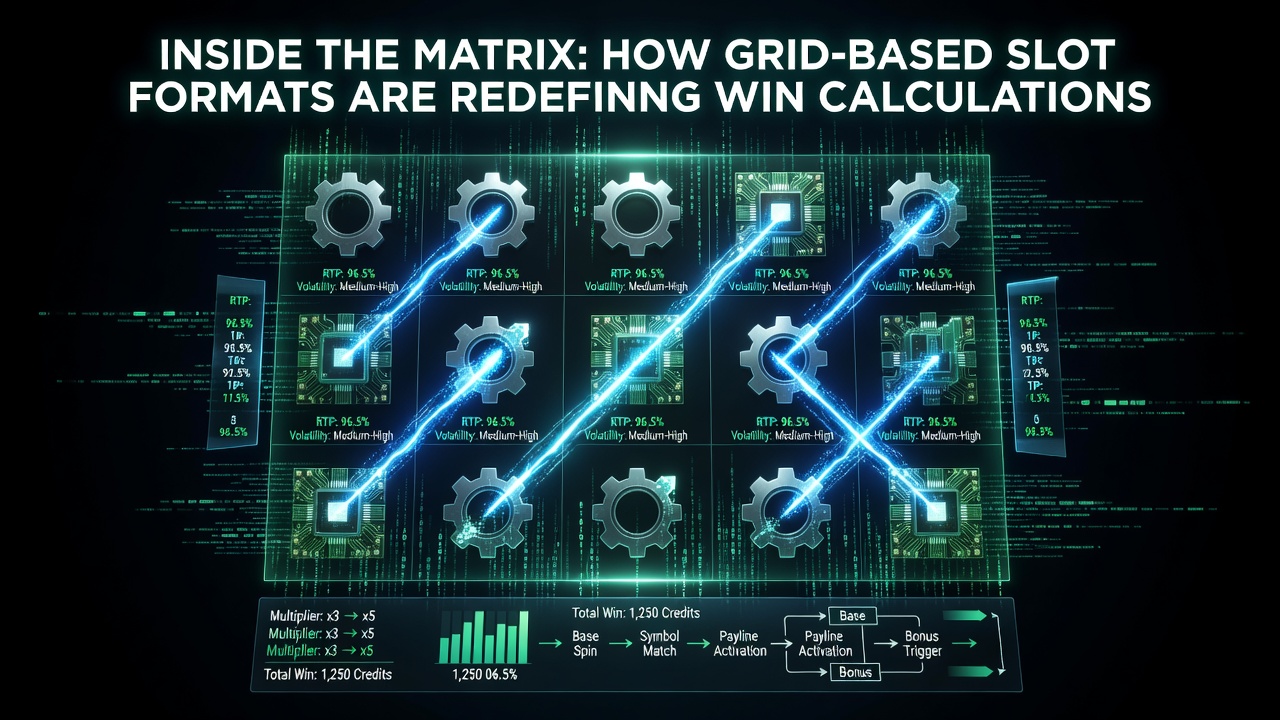
Grid layouts frequently incorporate special symbols that alter standard evaluation rules. Expanding wilds can bridge separate clusters, while multiplier symbols attach values to adjacent groups before the payout calculation completes. Some titles introduce progressive multipliers that accumulate across consecutive cascades within a single spin, extending the duration of a single round and changing the distribution of win sizes.
Observers note that these layered modifiers require additional computational steps during each evaluation cycle. Developers therefore optimize the scanning routines to maintain acceptable loading times, even when the grid expands beyond standard 7x7 dimensions.
Comparative Performance Across Jurisdictions
Reports from the Australian Communications and Media Authority track the adoption of grid mechanics in licensed markets outside North America. Data compiled through 2025 indicated that titles using cluster evaluation appeared in roughly 18 percent of new releases during that period, a figure that rose steadily from earlier years. Canadian provincial regulators have similarly recorded increased submissions featuring grid-based win systems, although approval criteria remain consistent with existing technical standards.
Industry associations such as the European Gaming and Betting Association have hosted technical workshops that examine how grid calculations interface with responsible gaming tools. Presentations at these sessions have focused on display clarity for players, ensuring that win evaluations remain transparent when multiple clusters form simultaneously.
Future Technical Developments
Engineers continue to explore three-dimensional grid representations and variable grid sizes that change during play. Early prototypes suggest that adaptive matrices could alter row and column counts based on triggered features, introducing new layers to the win calculation sequence. Testing protocols administered by oversight bodies require full documentation of these dynamic adjustments before any title receives certification.
Academic studies scheduled for release later in 2026 are expected to provide further insight into player interaction patterns with these evolving formats, drawing on anonymized session data supplied under regulatory agreements.
Conclusion
Grid-based slot formats have established distinct methods for determining wins through cluster adjacency and cascading sequences. Regulatory data from multiple jurisdictions confirms ongoing integration of these mechanics, while technical research continues to refine the algorithms that govern symbol evaluation. As matrix dimensions and modifier systems expand, the underlying calculation frameworks adapt to maintain certified performance standards across different markets.