How Sensory Layers in Progressive Titles Influence Bonus Activation Patterns Among Mobile Players
Carlo Washington · Aug 26, 2026

Sensory Layers Driving Bonus Activation Trends in Progressive Mobile Slots
Progressive slot titles on mobile devices layer visual animations, layered soundscapes, and precise haptic responses to guide players toward bonus rounds, and these elements combine in ways that shape activation frequency and timing. Developers build these sensory components into games where jackpots accumulate across networks, creating pathways that direct attention during extended play sessions. Data from mobile engagement platforms shows players encounter bonus triggers more consistently when progressive titles sync escalating audio tones with expanding reel visuals. Researchers tracking session metrics note that such coordination reduces hesitation at key decision points, leading to higher rates of feature entry compared with titles lacking matched cues. In August 2026, aggregated reports highlighted a measurable uptick in bonus activations on devices running iOS and Android versions of these games.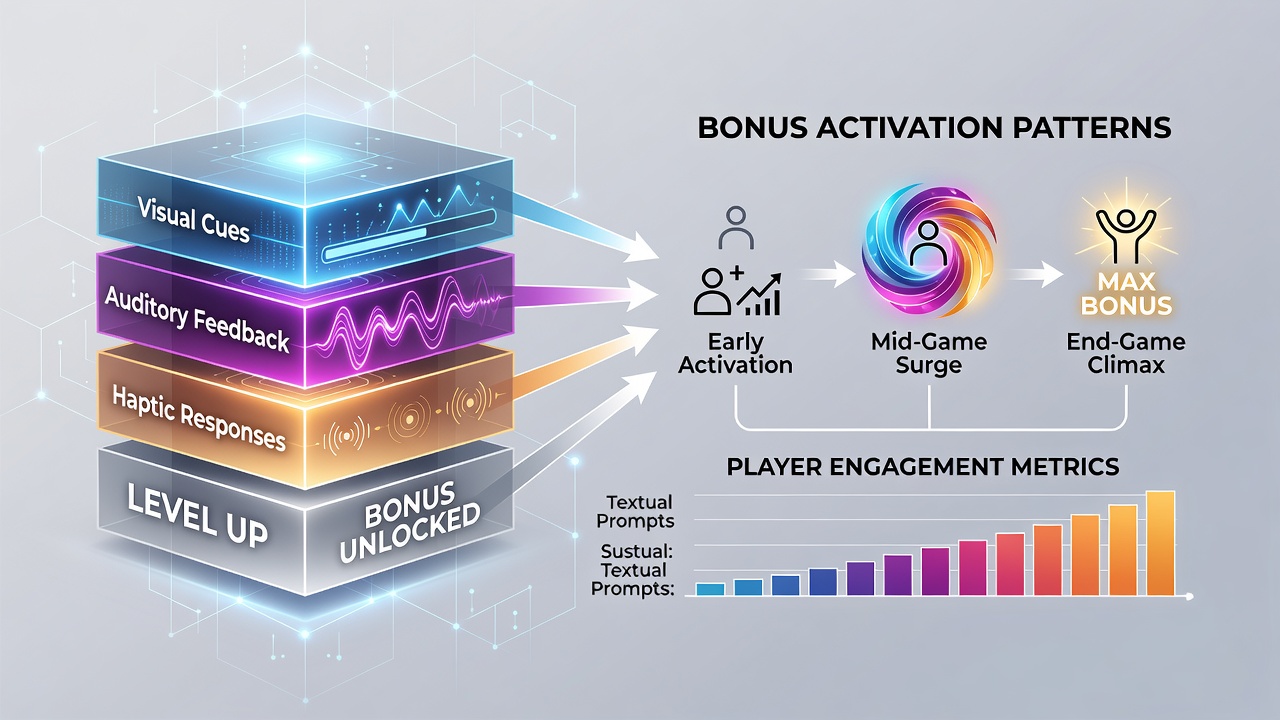
Progressive slot titles on mobile devices layer visual animations, layered soundscapes, and precise haptic responses to guide players toward bonus rounds, and these elements combine in ways that shape activation frequency and timing. Developers build these sensory components into games where jackpots accumulate across networks, creating pathways that direct attention during extended play sessions. Data from mobile engagement platforms shows players encounter bonus triggers more consistently when progressive titles sync escalating audio tones with expanding reel visuals. Researchers tracking session metrics note that such coordination reduces hesitation at key decision points, leading to higher rates of feature entry compared with titles lacking matched cues. In August 2026, aggregated reports highlighted a measurable uptick in bonus activations on devices running iOS and Android versions of these games.Visual Progressions and Player Focus
Visual layers in progressive slots often feature growing meters, shifting color gradients, and animated symbol builds that signal approaching bonus thresholds. These elements appear on smaller screens where space limits traditional payline displays, so designers emphasize central animations that expand outward during spins. Observers tracking eye-movement data find mobile users maintain longer fixation on these expanding elements, which correlates with increased bonus round entries. One industry analysis from the National Center for Responsible Gaming revealed patterns where titles employing color temperature shifts during jackpot growth recorded steadier activation sequences across thousands of sessions. Players respond to these visual escalations by adjusting bet sizes or spin speeds at moments when the on-screen meter approaches visible milestones, and the result appears in timestamped logs as clustered bonus triggers.Audio Integration and Timing Cues
Sound design adds another dimension through rising musical phrases, distinct chime sequences, and ambient effects that intensify near bonus thresholds. Mobile hardware allows these audio tracks to adapt based on device orientation and volume settings, creating personalized feedback loops during play. Figures from Canadian gaming research groups indicate that titles incorporating directional audio panning on stereo speakers see earlier bonus activations within individual sessions. The audio components work alongside visuals rather than in isolation, forming combined signals that prompt players at specific reel positions. When a progressive meter nears a trigger point, layered sound effects coincide with symbol movements to mark the opportunity, and session data shows players pause or increase spin velocity at these intersections more often than in audio-minimal games.