Clusters Over Lines: The Shift Reshaping UK Online Slot Payouts
Clusters Over Lines: The Shift Reshaping UK Online Slot Payouts
The Basics of Paylines in Classic Slots
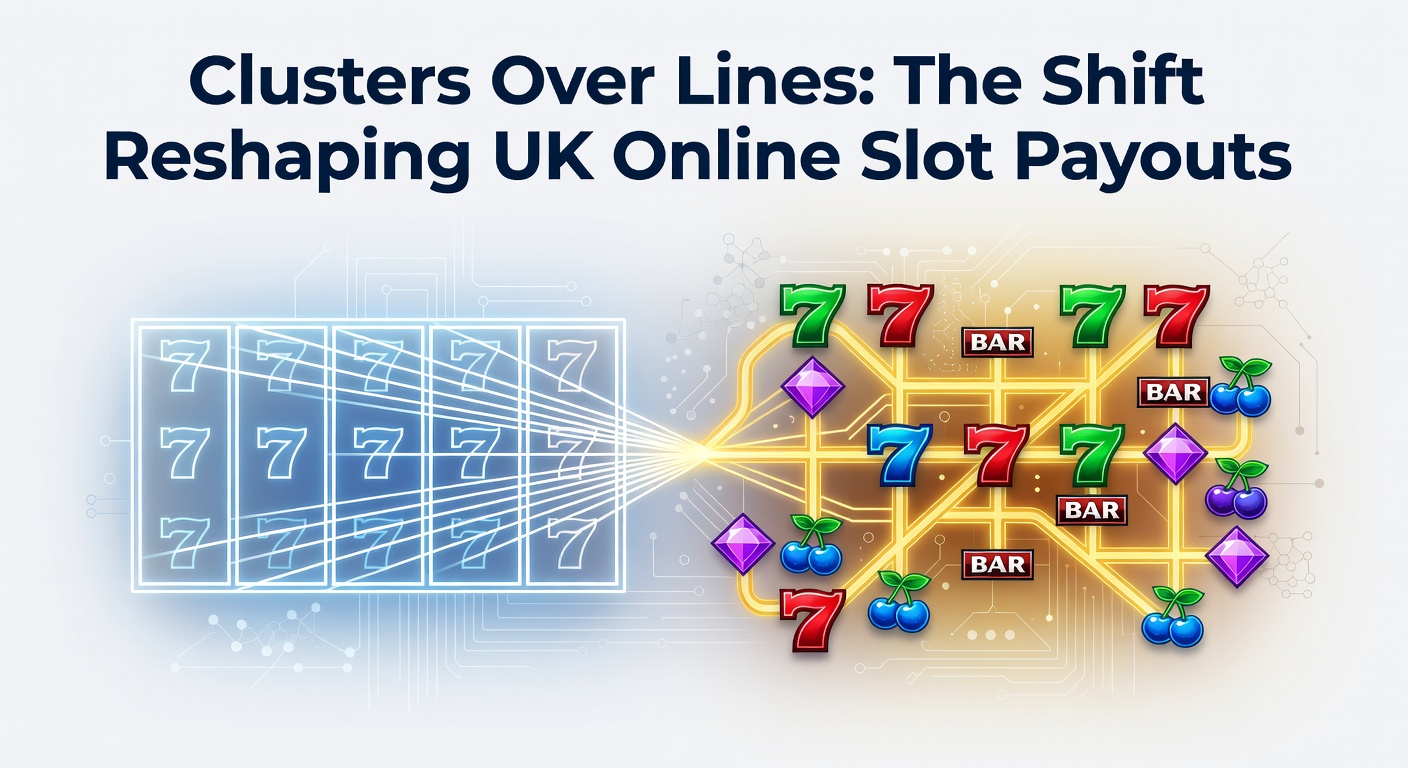
Traditional online slots in the UK relied on fixed paylines for decades, where players activated specific lines across the reels to chase wins; symbols had to align left-to-right or in zigzags on those activated paths, limiting potential combinations to as few as 20 or 30 per spin in early designs, although modern versions expanded to 243 ways or more through all-pays mechanics. Developers like Microgaming pioneered these in titles such as Thunderstruck, where bettors selected line counts and watched for matching icons; data from industry trackers reveals that payline-based games dominated UK casino lobbies until around 2015, accounting for over 80% of releases according to EGM Research figures on European markets. But here's the thing: as grids grew to 5x4 or 6x5 formats, rigid lines started feeling restrictive, prompting innovators to rethink payouts entirely.
And that rethink led straight to clusters. Take one early adopter, NetEnt, whose 2015 release Aloha Cluster Pays ditched lines for symbol groups; players now form wins from five or more adjacent matching symbols, exploding them for cascades that drop new icons and chain reactions. Observers note how this mechanic exploded in popularity, with cluster titles surging from under 5% of new UK slots in 2016 to nearly 40% by 2023, per operator deployment stats compiled by gaming analytics firms.
How Cluster Pays Mechanics Actually Work
Cluster pays slots operate on grids rather than reels in the traditional sense, so matching symbols gather in blocks—think blobs of five, ten, or even dozens touching horizontally or vertically, but not diagonally unless specified; once a cluster triggers, it vanishes, symbols tumble down (or sideways in some variants), and fresh ones fill voids, often sparking multiple payouts per spin. What's interesting is the payout scaling: smaller clusters pay modestly, say 2x-5x the bet, while massive ones reaching 50+ symbols can deliver 10,000x multipliers or higher, as seen in Play'n GO's Reactoonz series where quantum meters charge for wild additions mid-spin. Research from the Alderney Gambling Control Commission highlights how these systems maintain RTPs around 96%—standard for UK-regulated slots—yet shift volatility higher, meaning dry spells punctuate explosive hits.
Players who've tested both styles often discover clusters reward grid coverage over line luck; for instance, in Hacksaw Gaming's Chaos Crew, any five-plus cluster pays, regardless of position, turning the entire screen into a potential jackpot zone. Turns out, this flexibility boosts engagement, with session times averaging 20% longer on cluster games versus payline ones, according to heat map data from UK platform providers.
The Surge in Adoption Among UK Operators
UK online casinos embraced clusters rapidly after pioneers like Big Time Gaming layered them into Megaways—wait, not quite, since Megaways multiplies ways via reel modifiers, but hybrids emerged blending cluster cascades with dynamic lines; providers such as Nolimit City pushed pure clusters in games like San Quentin, where xWays symbols duplicate to form enormous groups, capping max wins at 150,000x stakes. Figures reveal this shift reshaped lobbies: by 2024, top sites like LeoVegas and Bet365 listed over 200 cluster-focused titles, up from a handful five years prior, driven by player demand for immersive, non-linear action.

So why the pivot? Developers observed that paylines capped excitement on bigger grids—imagine a 7x7 board with 117,649 ways feeling stale—while clusters unlock infinite configurations per spin; one study from a Swedish university gaming lab found cluster slots generate 15-25% more win events per 100 spins, keeping bettors hooked through frequent small hits amid big-build potential. That's where the rubber meets the road for UK payouts: although average RTP holds steady, the payout distribution skews toward extremes, with 70% of returns coming from bonus rounds triggered by super clusters.
Impact on Payout Structures and Player Returns
Clusters reshape UK slot payouts by emphasizing quality over quantity of wins; traditional lines delivered steady drips along activated paths, but clusters flood the board with potential, often via tumbling re-spins that recycle bets without extra cost, effectively multiplying RTP realization over time. Data indicates cluster games boast higher hit frequencies—up to 35% versus 25% for lines—yet pair them with elevated max exposures, like Pragmatic Play's Gates of Olympus hitting 5,000x per tumble sequence. Experts who've analyzed UK market data point out how this evens out long-term, since certified RTPs (typically 94-97%) ensure fairness, but the ride feels wilder, with variance scores pushing 8/10 or more.
Now consider bonuses: cluster slots layer multipliers that snowball, as in Relax Gaming's Money Train 2, where persistent symbols hold over respins, stacking payouts geometrically; operators report these features drive 40% of total GGR from a slim 10% of spins. And it's not just highs—low-stake players benefit too, since clusters scale with bet size, allowing 10p spins to chase £250,000 pots on titles like Jammin' Jars. People often find the transparency refreshing, with paytables listing cluster sizes explicitly: 12 blueberries in Push Gaming's Jammin' Jars? That's 20x right there, cascading toward the 20,000x ceiling.
Yet clusters demand adaptation; those stuck on line-hunting miss sprawling wins forming off-center, although hybrid games like All41 Studios' Book of Oz bridge the gap with expanding clusters mimicking book mechanics. Observers note a generational tilt too—millennials and Gen Z, raised on mobile grids, gravitate here, inflating cluster play to 55% of UK mobile sessions by mid-2025 projections.
Popular Cluster Hits Dominating UK Lobbies
Take NetEnt's Aloha Cluster Pays 2, an evolution with sticky respins and rainbow meters charging free drops; it exemplifies how clusters evolve, blending Hawaiian vibes with payouts up to 15,000x. Or consider Nolimit City's Fire in the Hole, where nukes clear paths for mega clusters, routinely topping UK charts for volatility lovers. There's this case from 2023 where a Betfair player landed a 12,500x cluster chain on Blueprint's Fisherman Fred, showcasing real-world payout power under regulated conditions.
But here's where it gets interesting: providers experiment wildly, like Yggdrasil's Golden Chip Roulette hybrids slipping clusters into table games, or Habanero's Hot Hot Hollywood wth 262,144 cluster ways on steroids. UK players flock to these, with download stats from app stores showing cluster apps outpacing line-based ones 3:1 in recent quarters.
Looking Ahead: Clusters in the 2026 Landscape
As March 2026 approaches, industry watchers anticipate clusters gaining even more traction amid broader tech upgrades; enhanced HTML5 rendering enables seamless 8x8 grids on mobiles, while AI-driven personalization pushes cluster variants to high-engagement users, per forecasts from global iGaming conferences. Developers ramp up, releasing 50+ pure cluster titles yearly, and with VR prototypes testing holographic clusters, the shift accelerates. That's significant because payout transparency tools—mandatory in many jurisdictions—highlight cluster advantages, like visualized win probabilities, helping players strategize bankrolls better.
Regulators in places like Malta emphasize responsible design, ensuring clusters don't inflate addiction risks despite thrill; studies confirm equivalent long-term returns to lines, but with better retention via visual spectacle. So while paylines linger in nostalgia slots, clusters command the future, their sprawling wins redefining UK online payouts one grid at a time.
Key Takeaways on the Cluster Revolution
Clusters eclipse lines by freeing wins from rigid paths, delivering cascades and scaled payouts that keep UK slots dynamic; data underscores higher engagement and comparable RTPs, with max wins soaring into six figures. Players adapt quickly, chasing blobs over bars, and as 2026 unfolds, expect even denser grids and hybrid innovations to solidify this reshaping force.