Acoustic Layering and Retention Dynamics in Digital Reel Platforms

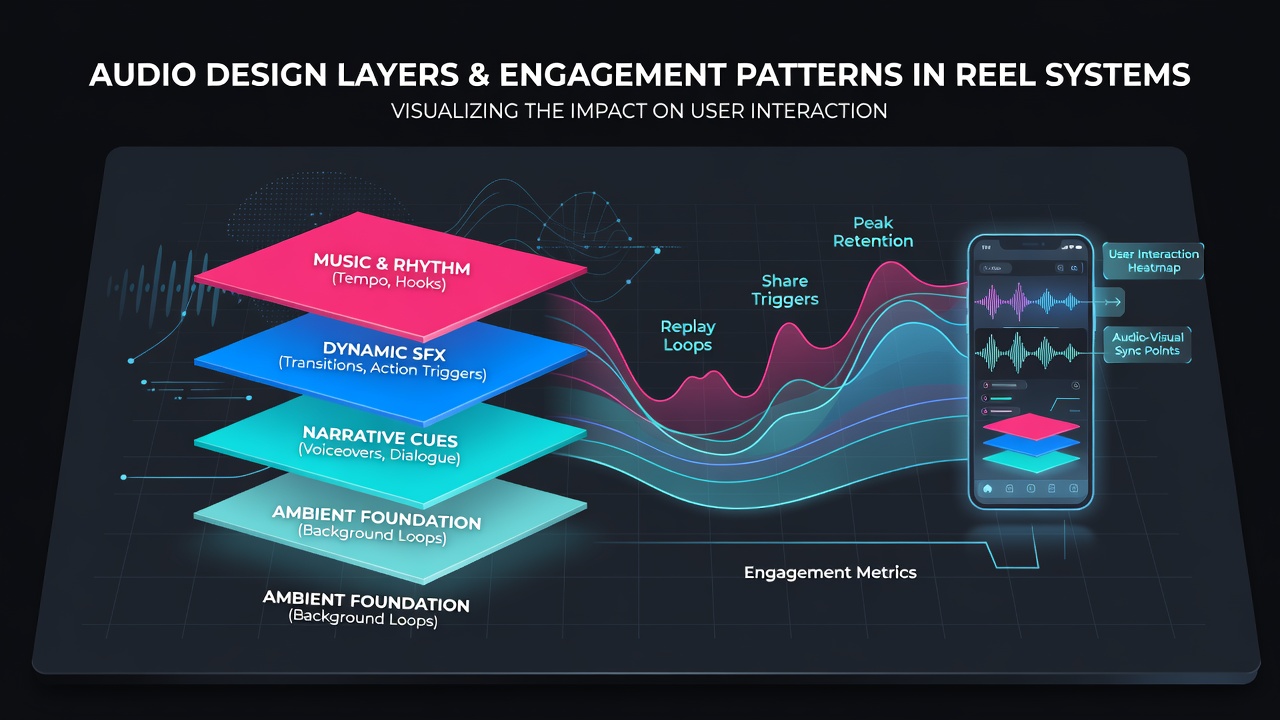
Audio design in reel-based digital entertainment systems operates through multiple synchronized layers that include background tracks, reel spin effects, symbol impact sounds, and escalating win chimes, each calibrated to match specific game states and user actions. Researchers examining these systems note that the separation of these layers allows independent adjustment of volume, frequency, and timing, which in turn produces measurable shifts in session duration and repeat visit rates across platforms.
Core Components of Audio Layer Construction
Background music forms the foundational layer and runs continuously at low amplitude to establish an ambient mood without interfering with primary gameplay feedback. Reel spin sounds occupy the second layer and activate only during symbol rotation, while symbol-specific impacts create the third layer that triggers upon landing events. Win sequences build a fourth layer that increases in complexity as payout values rise, often layering additional harmonic elements over the base reel audio.
Studies conducted by academic institutions have tracked how these layers interact when users encounter near-miss outcomes, where partial symbol alignments coincide with abrupt audio cutoffs that reset tension levels. Data collected from controlled sessions shows that precise timing between layer transitions correlates with extended play intervals, because the auditory reset prevents habituation while maintaining anticipation.
Engagement Pattern Measurements Across Platforms
Platform operators collect telemetry on click frequency, spin rate, and session length while varying audio configurations in A/B tests. One analysis from a North American research consortium revealed that reducing the dynamic range of win chimes by 20 percent led to a 12 percent drop in average session time, whereas maintaining full dynamic range sustained higher interaction density throughout the session. The same dataset indicated that players exposed to layered audio returned to the same title within 48 hours at rates 8 percent above those using single-layer audio mixes.
Industry reports compiled by the Canadian Gaming Association further document that seasonal updates incorporating new audio layers coincide with spikes in daily active users, particularly when the new layers introduce region-specific instrumentation or tempo variations. Observers tracking these updates note that the changes register most strongly in mobile sessions, where device speakers render higher-frequency elements more prominently than desktop configurations.
Regulatory Context and Technical Standards in Mid-2026
As of June 2026, technical standards discussions within international gaming bodies have begun addressing minimum requirements for audio layer separation to support responsible play features. These conversations reference existing accessibility guidelines that recommend adjustable master volumes and optional layer muting, allowing users to retain visual feedback while reducing auditory stimulation. Compliance documentation from operators indicates that systems already equipped with granular layer controls adapt more readily to these emerging expectations.
Research published through university partnerships in Australia demonstrates that players who activate layer-specific volume sliders maintain consistent engagement levels across longer periods compared with those restricted to global volume controls. The findings emphasize that the ability to isolate reel spin sounds from win audio produces distinct behavioral signatures, with isolated reel audio correlating to steadier spin pacing and reduced acceleration during bonus rounds.
Cross-Platform Audio Implementation Variations
Desktop environments typically allocate separate audio channels for each layer through system-level mixing, whereas mobile implementations rely on compressed assets that blend layers at the engine level before output. This compression difference means mobile sessions often exhibit tighter synchronization between visual reel movement and audio onset, yet lose some of the spatial separation that desktop users experience through stereo output. Engineers adjusting for these constraints frequently apply dynamic range compression selectively to the win layer, preserving impact while fitting within mobile speaker limitations.
Telemetry shared by European gaming trade groups shows that titles released with platform-specific audio profiles achieve higher completion rates for bonus features, because the audio cues remain audible and distinct regardless of hardware constraints. The same groups report that cross-platform consistency in layer timing reduces user complaints about perceived audio lag during rapid spin sequences.
Future Technical Developments
Developers continue to explore adaptive audio systems that modulate layer intensity based on real-time session metrics such as spin velocity and feature frequency. Early implementations adjust background layer volume downward during extended dry spells while amplifying symbol impact clarity, a technique that preliminary internal testing suggests can stabilize engagement curves without altering payout mathematics. These systems require precise calibration of attack and decay times for each layer transition to avoid abrupt auditory jumps that might disrupt immersion.
Conclusion
Layered audio design in reel-based digital entertainment systems functions as a measurable variable that influences retention metrics through controlled timing, dynamic range, and platform-specific optimization. Data from multiple regulatory regions and academic sources consistently links well-separated audio layers to sustained interaction patterns, while emerging technical standards in 2026 continue to shape how these layers are implemented and adjusted across operators. Continued measurement of audio configuration effects will likely refine the relationship between sound structure and user behavior in these environments.